He lost his sight.
And for the first time, he saw clearly.
“I wasn't my body. I wasn't my thoughts. I wasn't my emotions. I was the awareness behind it all. I was the one watching. And in that moment, I saw for the first time.”
Justin Holland was twenty years old when a beer bottle was smashed across his face during a fight outside a girlfriend's apartment. He moved back home. Weeks later he was blind. Months after that came the diagnosis: a genetic condition the head trauma had likely triggered.
He did not have the awakening then. He was still running.
What followed was years of outrunning everything he had not dealt with. A YouTube channel as a blind bodybuilder. Bodybuilding competitions. Sales careers. Businesses started and closed. Money made and spent. A marriage that had become two people sharing the same space and nothing deeper. Alcohol as a way to manage the gap between the life he was living and the one he could feel himself capable of.
The turning point was not going blind. It was July 4th, 2022 — blackout drunk, raging, coming home and frightening his wife. The next morning she told him she could not keep doing this. That night he found a livestream from a man who had been sober for three years and described a drinking pattern that sounded exactly like his. Justin quit that day.
What followed was an obsession — with how the mind actually works, with patterns, beliefs, and subconscious programming. He dove into it with a seriousness he had not brought to anything before.
Then in 2023, inside a men's brotherhood, he sat with two questions he had been moving past his entire adult life.
Who am I? What am I?
He stopped moving long enough to actually answer them. Not to think about them — to answer them. Through his own honest reckoning, he saw it: the pattern he had been running, what he had been creating, and exactly why. Not as an idea. Not as something he understood. He saw it. And once he saw it, he could not unsee it.
The pattern most people are blind to
What emerged from that awakening was not a philosophy Justin read about. It was one he lived into — and one he could not stop seeing once he saw it.
Most people are walking through their lives creating outcomes they do not want — and they are blind to the reason why. Not because they are broken. Not because they have not worked hard enough. Because they cannot see the pattern. The subconscious programming running underneath. The belief they carry that contradicts everything they say they want.
We are all creators of our reality. Not in the positive-thinking sense, not in the ask-the-universe sense. In the sense that our subconscious programming shapes every decision, every pattern, every result. Until you can see it, you create unconsciously. When you can see it, you can create deliberately.
That is what a blind spot actually is. Not a character flaw. Not a trauma label. A program running underneath the conscious level — invisible by nature, consequential by design. You say you want one thing and keep creating the opposite, and you cannot understand why. Not because something is wrong with you. Because you cannot see what you cannot see.
Once you see it, you can't unsee it. That is not a tagline. That is the mechanism.
When a blind spot is genuinely seen — not intellectually processed, not analyzed further, but actually seen — the hold it has changes. Often immediately. The pattern that persisted for years reveals itself, and it cannot go back to being invisible. That is not magic. That is how awareness works.
Three levels of blindness
Most approaches to personal development work at one level. Justin's framework maps all three — and where most people get stuck between them.
Physical
Identifying as only the body. Seeking external solutions for internal problems. Believing that more — money, status, achievement — will finally create the feeling of enoughness. The person working on the outside because they cannot see the inside.
Internal
Understanding that the inner world matters but still identifying with thoughts and emotions as if they are you. Working at the level of affirmations without addressing the deeper subconscious programming generating the thoughts. The most common place people stall.
Spiritual
Understanding consciousness intellectually but using that understanding to bypass actual human experience. Transcending emotion rather than integrating it. The goal is not an enlightened master on a mountain who never gets angry. That is a different kind of blindness.
Justin is not outside this himself. He still gets angry. He still makes mistakes. He still has blind spots. The work is not about rising above the human experience — it is about not being unconsciously run by it. There is a specific difference between reacting from a program you cannot see and making a choice you actually made. That difference is what this work is about.
What changes when the blind spot is cleared
When a specific blind spot clears, specific things stop happening. The relationship that has ended the same way three times in a row starts going differently. The financial ceiling you keep hitting regardless of how much you earn starts moving. The decision you have been circling for six months becomes obvious. These are the fingerprints of a subconscious program — running your behavior beneath your awareness, producing the results you kept saying you did not want.
This is what reaching your full potential actually means. Not working harder. When your conscious goal and your subconscious belief about whether you deserve it — whether you can handle it, whether you are allowed to have it — stop fighting each other, the energy you have been burning on that internal war becomes available for something else.
This is not a promise that life becomes painless. Challenge is part of being alive. What changes is the unconscious loop — creating the same outcomes repeatedly without being able to see the pattern underneath.
Justin still encounters his own blind spots. Still has his own breakthroughs. He is not claiming to have arrived somewhere others have not. This is ongoing. That is the point — we are continuously evolving, and it is nearly impossible to see our own blind spots alone. As Justin puts it: it is like trying to see the label when you are inside the bottle.
He didn't theorize his way into these ideas.
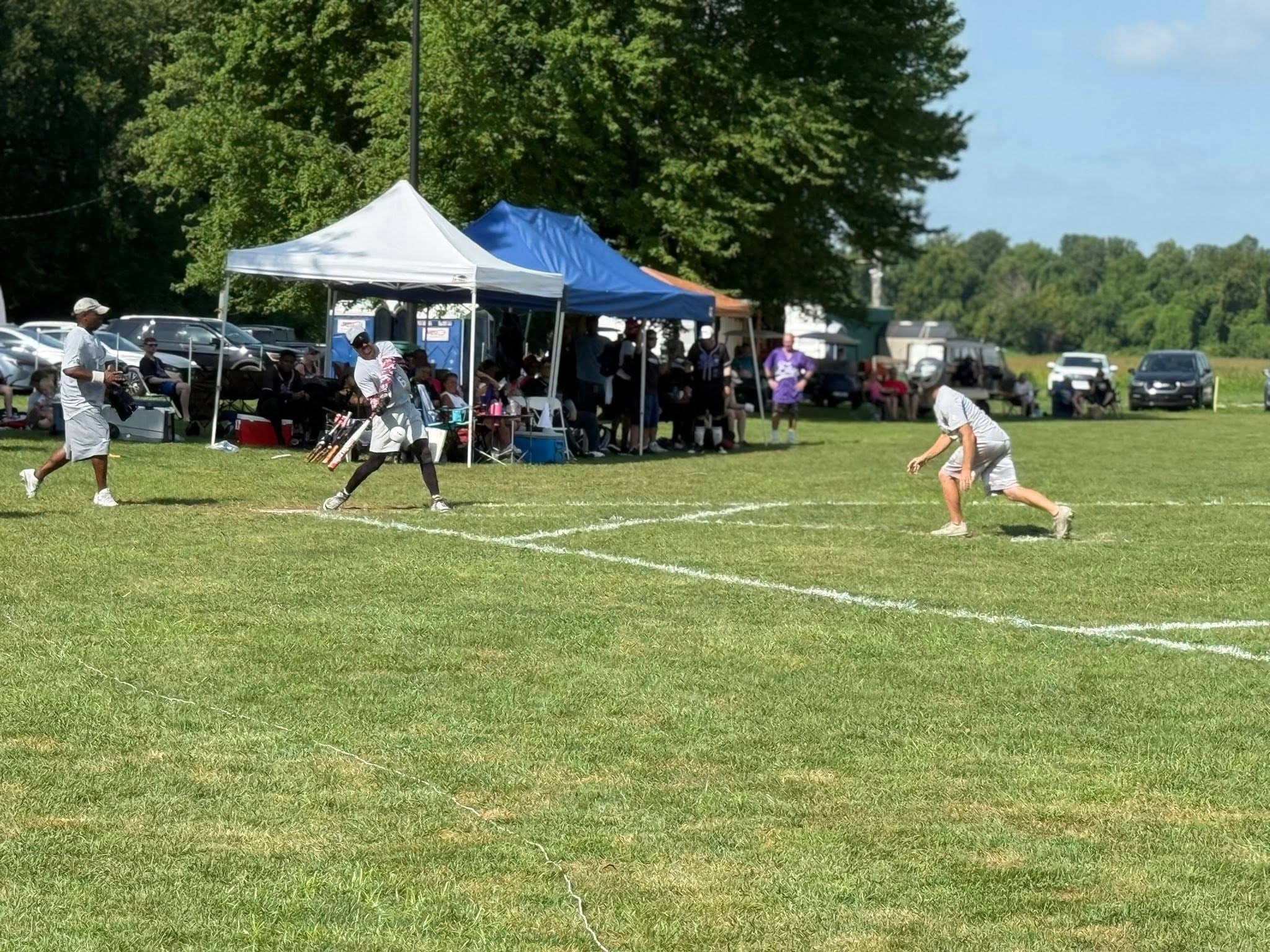
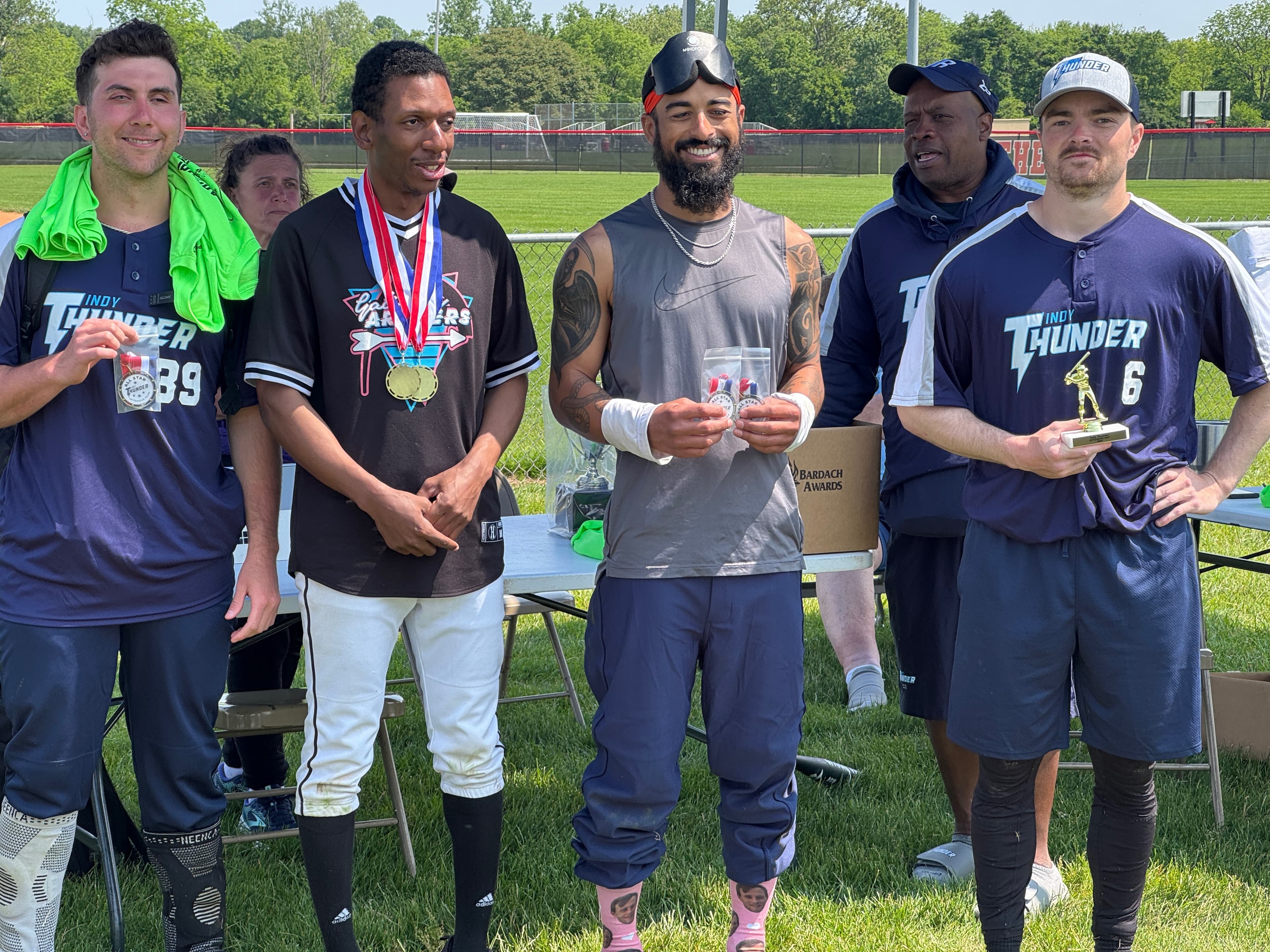
Justin is blind and competes in Beepball — an adaptation of baseball for blind and visually impaired athletes. The ball beeps. He cannot see it. He tracks the sound and swings. He has hit home runs and won Offense MVP at the 2025 Thunder Tournament and competed at the Beepball World Series.
He does not just teach this principle. He competes with it. Clear the subconscious counterintention — the inner program running against what you want — and what you are actually capable of shows up. He did it in bodybuilding. He does it on a baseball field without sight. It is the same work.
Questions worth asking
What exactly is a blind spot?
A blind spot is a piece of subconscious programming that contradicts your stated conscious intention. You say you want one thing — financial success, a connected relationship, a life that feels real — and keep creating the opposite. Not because you are weak, but because the program running underneath is invisible to you. By definition, you cannot see it from where you are standing. That is what makes it a blind spot.
How is this different from therapy or conventional coaching?
Therapy often helps you understand your past. Coaching often helps you build new strategies or habits. Justin's work is neither of those. It is about seeing — identifying the specific subconscious pattern that is creating the outcome you do not want, and seeing it clearly enough that it cannot go back to being invisible. That is different from analyzing it, processing it, or building new behaviors on top of it.
What does 'once you see it, you can't unsee it' actually mean?
It means the breakthrough is in the seeing, not the analysis. You can understand for years that you have a fear of success and still be running the pattern. The understanding is not the sight. When the sight happens — when you genuinely see the thing rather than think about it — the shift is often immediate. That is how awareness works. You cannot go back to not seeing something you have actually seen.
Is Justin saying that all suffering is self-created?
No. There are real forces outside our control. There are things that happened to us that we did not choose. Justin is not saying your trauma was your fault, or that positive thinking creates outcomes. He is addressing the slice of our experience that we do have creative influence over — which is larger than most people realize — and specifically the part where we are running the same painful patterns unconsciously and cannot understand why.
Who is Justin's work for?
People who have done the work — therapy, coaching, books, retreats — and are still hitting the same ceiling. People who have a quiet, persistent sense that something is off and cannot name what it is. People who are ready to look honestly at what they have been blind to rather than add another technique, framework, or strategy on top of the pattern that keeps producing the same result.
The work is in the seeing.
Whether Justin brings this to your stage or works with you directly, the result is the same — you leave with something you cannot un-see.